AP Biology Unit 1 Study Guide: A Comprehensive Plan
This guide comprehensively reviews Unit 1, focusing on chemistry of life, macromolecules, enzymes, and thermodynamics—essential for AP Biology exam success.
Overview of Unit 1: Chemistry of Life
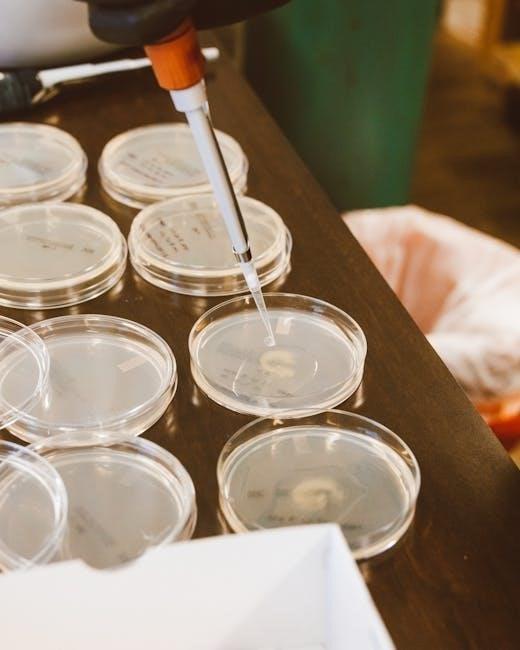
Unit 1 of AP Biology lays a foundational understanding of life’s chemical basis. It delves into the properties of water, crucial for biological systems, and explores the elements composing living organisms – primarily CHNOPS. A significant portion focuses on macromolecules: carbohydrates, lipids, proteins, and nucleic acids, detailing their structures and functions.
Understanding enzyme structure and their role as biological catalysts is paramount. Furthermore, the unit introduces thermodynamic principles, including the first and second laws, and explores concepts like free energy and ATP. Mastery of these concepts is vital, as they underpin all subsequent topics in AP Biology, providing the necessary context for comprehending complex biological processes.
Importance of Chemistry in Biology
Chemistry serves as the bedrock of all biological processes. Life’s intricate functions, from cellular respiration to photosynthesis, are fundamentally chemical reactions. Understanding chemical principles allows us to decipher how molecules interact, form structures, and drive the processes essential for life.
The unique properties of water, stemming from its chemical structure, create an environment conducive to life. Macromolecules, built from smaller chemical units, dictate cellular structure and function. Enzymes, protein catalysts, accelerate biochemical reactions. Therefore, a strong grasp of chemistry is not merely supplemental, but absolutely essential for success in AP Biology and comprehending the complexities of living systems.
Water’s Unique Properties
Water’s exceptional characteristics are crucial for life on Earth. Its polarity leads to cohesion – water molecules sticking together – and adhesion, clinging to other surfaces, vital for plant transport. Water’s high specific heat capacity allows it to moderate temperature, protecting aquatic life and terrestrial organisms.
Furthermore, water is a nearly universal solvent, dissolving numerous substances, facilitating chemical reactions within cells. These properties, stemming from hydrogen bonding, create a stable environment for biological processes. Understanding these characteristics is fundamental to grasping how life functions and thrives within aqueous environments.
Cohesion and Adhesion
Cohesion, the attraction between like molecules, is prominent in water due to hydrogen bonds. This creates surface tension, allowing insects to walk on water. Adhesion, the attraction between different substances, causes water to climb the walls of plant vessels – capillary action – transporting water from roots to leaves.
Both properties are essential for sustaining life. Cohesion contributes to water’s high surface tension, while adhesion facilitates nutrient and water transport in plants. These intermolecular forces demonstrate water’s unique ability to support biological systems and maintain environmental stability.
High Specific Heat Capacity
Water’s high specific heat capacity—the amount of energy needed to raise its temperature—is crucial for life. This property stems from extensive hydrogen bonding. Water absorbs significant heat before changing temperature, moderating climate and stabilizing internal temperatures of organisms.
Large bodies of water influence regional climates, preventing drastic temperature fluctuations. Within organisms, water helps maintain a stable internal environment, protecting cells from damage. This thermal stability is vital for biochemical processes, ensuring enzymes function optimally and cellular components remain intact.

Universal Solvent Properties
Water’s polarity makes it an exceptional solvent, earning it the title “universal solvent.” Its ability to dissolve a wide range of polar and ionic substances is fundamental to life. Water molecules surround and separate ions and polar molecules, facilitating chemical reactions within cells.
This solvent capability allows for the transport of nutrients and waste products within organisms. Biochemical reactions occur in aqueous solutions, and water’s dissolving power ensures reactants can interact. Many biological molecules, like proteins and carbohydrates, rely on water for their structure and function.
Elements of Life
Living organisms are composed of a relatively small number of elements, though many exist. Carbon, hydrogen, oxygen, nitrogen, phosphorus, and sulfur (CHNOPS) are the most essential, forming the building blocks of organic molecules. Carbon’s unique ability to form four covalent bonds allows for diverse and complex molecular structures, making it the backbone of life.
These elements combine in various proportions to create carbohydrates, lipids, proteins, and nucleic acids. Understanding their roles is crucial for comprehending biological processes. Trace elements, present in small amounts, are also vital for specific functions within organisms, contributing to enzyme activity and overall health.
Carbon’s Role in Organic Molecules
Carbon’s exceptional bonding capacity is fundamental to life’s molecular diversity. It readily forms four covalent bonds with other carbon atoms, creating long chains and complex structures like rings and branched molecules. This versatility allows for the construction of a vast array of organic compounds essential for biological functions.

Carbon’s ability to bond with hydrogen, oxygen, nitrogen, and other elements further expands the possibilities for molecular complexity. These carbon-based molecules serve as the foundation for carbohydrates, lipids, proteins, and nucleic acids, driving all life processes. Understanding carbon’s role is key to grasping organic chemistry’s importance in biology.
Essential Elements: CHNOPS
CHNOPS—Carbon, Hydrogen, Nitrogen, Oxygen, Phosphorus, and Sulfur—constitute the core elements of all living organisms. Carbon provides the backbone for organic molecules, while hydrogen is a key component of water and organic compounds. Nitrogen is crucial for proteins and nucleic acids, and oxygen is vital for respiration and water.
Phosphorus is essential for nucleic acids, ATP, and phospholipids, and sulfur is found in certain amino acids and proteins. These six elements, in various combinations, form the building blocks of life’s macromolecules. Remembering CHNOPS is fundamental to understanding the chemical composition of living systems and their biological functions.

Macromolecules: Structure and Function
Macromolecules are large organic polymers essential for life, built from smaller monomer subunits. These include carbohydrates, lipids, proteins, and nucleic acids, each with unique structures dictating specific functions. Understanding their composition—carbon-based chains—is crucial. Carbohydrates provide energy and structural support, while lipids store energy, form membranes, and act as hormones.
Proteins perform diverse roles, from enzymatic catalysis to structural support and transport. Nucleic acids, DNA and RNA, store and transmit genetic information. Studying macromolecule structure reveals how their arrangement directly impacts their biological roles within living organisms, a core concept in AP Biology.
Carbohydrates
Carbohydrates are vital organic molecules serving as primary energy sources and structural components in living systems. They exist as monosaccharides (simple sugars like glucose), disaccharides (two monosaccharides joined, like sucrose), and polysaccharides (complex chains, like starch and cellulose). Monosaccharides provide immediate energy, while polysaccharides offer long-term energy storage and structural support.
Functions include providing cellular fuel, forming plant cell walls (cellulose), and storing energy in animals (glycogen). Understanding carbohydrate structure—carbon, hydrogen, and oxygen in a 1:2:1 ratio—is key. Mastering these concepts is essential for success on the AP Biology exam, particularly regarding energy flow in biological systems.
Monosaccharides, Disaccharides, Polysaccharides
Carbohydrates are categorized by their structural complexity into three main types: monosaccharides, disaccharides, and polysaccharides. Monosaccharides, like glucose, fructose, and galactose, are simple sugars serving as the building blocks for larger carbohydrates. Disaccharides, such as sucrose (table sugar), lactose (milk sugar), and maltose, form when two monosaccharides join via a dehydration reaction.
Polysaccharides are complex carbohydrates composed of many monosaccharides linked together. Examples include starch (energy storage in plants), glycogen (energy storage in animals), and cellulose (structural component of plant cell walls). Understanding these distinctions and their roles is crucial for grasping carbohydrate function within biological systems and performing well on the AP exam.
Functions of Carbohydrates in Living Organisms
Carbohydrates play diverse and vital roles within living organisms, extending far beyond simple energy provision. Primarily, they serve as a readily available source of energy for cellular processes, with glucose being the most commonly utilized fuel. Starch in plants and glycogen in animals act as short-term energy storage molecules, efficiently packing glucose units for later use.
Furthermore, carbohydrates contribute to structural support; cellulose, for instance, provides rigidity to plant cell walls. They also participate in cell recognition and signaling, often attached to proteins and lipids on cell surfaces. A solid understanding of these multifaceted functions is essential for success on the AP Biology exam.
Lipids
Lipids are a diverse group of hydrophobic molecules crucial for life, categorized into triglycerides, phospholipids, and steroids. Triglycerides, composed of glycerol and fatty acids, excel at long-term energy storage, providing more than twice the energy per gram compared to carbohydrates. Phospholipids form the structural basis of cell membranes, creating a selectively permeable barrier with their hydrophilic heads and hydrophobic tails.
Steroids, like cholesterol, serve as important signaling molecules and contribute to membrane fluidity. These molecules are vital for insulation, hormone production, and protection of internal organs. Mastering lipid structure and function is key for understanding cellular organization and energy dynamics.
Triglycerides, Phospholipids, Steroids
These three lipid types demonstrate the versatility of fats in biological systems. Triglycerides, built from glycerol and three fatty acids, are primarily for efficient energy storage, offering concentrated fuel. Phospholipids, featuring a glycerol, two fatty acids, and a phosphate group, are the main component of cell membranes, forming a vital lipid bilayer.
Steroids, characterized by a carbon skeleton of four fused rings, include cholesterol and hormones like testosterone and estrogen. Cholesterol influences membrane fluidity, while hormones act as chemical messengers. Understanding their distinct structures reveals how each lipid type fulfills unique and essential roles within living organisms.
Lipid Functions: Energy Storage, Insulation, Hormones
Lipids are crucial for several life-sustaining functions beyond structural components. Primarily, they excel in long-term energy storage, yielding more than twice the energy per gram compared to carbohydrates or proteins. This makes them ideal for animals needing concentrated reserves.
Furthermore, lipids provide excellent insulation, protecting vital organs and maintaining body temperature, particularly in mammals. Hormones, many derived from cholesterol (a steroid), act as chemical messengers, regulating diverse physiological processes. These diverse roles highlight lipids’ importance in energy balance, protection, and communication within organisms.
Proteins
Proteins are the workhorses of the cell, exhibiting an incredible diversity of functions essential for life. They are polymers constructed from amino acid monomers linked by peptide bonds, forming polypeptide chains. These chains fold into complex three-dimensional structures – primary, secondary, tertiary, and sometimes quaternary – dictated by amino acid sequence and interactions.
Proteins serve as enzymes, catalyzing biochemical reactions; provide structural support in tissues; and act as transport molecules, carrying substances across cell membranes. Their versatility stems from their unique shapes, enabling specific interactions with other molecules, making them indispensable for nearly every cellular process.

Amino Acid Structure and Peptide Bonds
Amino acids are the fundamental building blocks of proteins, each possessing a central carbon atom bonded to an amino group, a carboxyl group, a hydrogen atom, and a unique side chain (R-group). This R-group distinguishes the 20 common amino acids, conferring different chemical properties.
Amino acids link together via peptide bonds, formed through a dehydration reaction between the carboxyl group of one amino acid and the amino group of another. This process creates a polypeptide chain, the primary structure of a protein. Understanding amino acid structure and peptide bond formation is crucial for comprehending protein function and the complexities of biological systems.
Levels of Protein Structure (Primary, Secondary, Tertiary, Quaternary)
Proteins exhibit four levels of structural organization. The primary structure is the linear sequence of amino acids. Secondary structure arises from localized folding into alpha-helices and beta-pleated sheets, stabilized by hydrogen bonds. Tertiary structure is the overall 3D shape, determined by interactions between R-groups – hydrogen bonds, ionic bonds, disulfide bridges, and hydrophobic interactions.
Some proteins also have a quaternary structure, formed by the association of two or more polypeptide chains (subunits). These levels dictate a protein’s unique function, highlighting the importance of understanding how structure relates to biological activity.
Protein Functions: Enzymes, Structural Support, Transport

Proteins perform a vast array of functions crucial for life. Enzymes catalyze biochemical reactions, accelerating metabolic processes. They exhibit specificity, binding to substrates at active sites. Structural proteins, like collagen and keratin, provide support and shape to cells and tissues. These proteins contribute to the integrity of organisms.
Transport proteins, such as hemoglobin, facilitate the movement of molecules across cell membranes or throughout the body. Other functions include movement (actin and myosin), defense (antibodies), and signaling (hormones). Understanding these diverse roles is key to grasping biological processes.
Nucleic Acids
Nucleic acids – DNA and RNA – are fundamental for all known forms of life. DNA (deoxyribonucleic acid) stores genetic information, dictating an organism’s traits. It’s a double-stranded helix composed of nucleotides. RNA (ribonucleic acid) plays roles in gene expression, translating genetic code into proteins. It’s typically single-stranded.
Each nucleotide consists of a sugar, a phosphate group, and a nitrogenous base (adenine, guanine, cytosine, thymine/uracil). Base pairing rules (A with T/U, C with G) are critical for structure and function. Nucleic acids enable genetic information storage, replication, and transfer, essential for heredity and cellular processes.
DNA and RNA Structure
DNA’s iconic double helix structure arises from two polynucleotide strands winding around each other. Each strand is a chain of nucleotides – sugar (deoxyribose), phosphate, and nitrogenous base. Bases pair specifically: adenine (A) with thymine (T), and guanine (G) with cytosine (C), held by hydrogen bonds.
RNA, generally single-stranded, utilizes ribose sugar and uracil (U) instead of thymine. Different RNA types (mRNA, tRNA, rRNA) have distinct structures and functions in protein synthesis. The sugar-phosphate backbone provides structural support, while the sequence of bases encodes genetic information. Understanding these structural differences is key to grasping their unique roles.

Nucleotide Components and Base Pairing
Nucleotides, the building blocks of nucleic acids, comprise three essential components: a five-carbon sugar, a phosphate group, and a nitrogenous base. The sugar is deoxyribose in DNA and ribose in RNA. The phosphate group links nucleotides, forming the polynucleotide chain. Nitrogenous bases fall into two categories: purines (adenine and guanine) and pyrimidines (cytosine, thymine in DNA, and uracil in RNA).
Specific base pairing rules govern DNA structure: Adenine (A) always pairs with Thymine (T) via two hydrogen bonds, while Guanine (G) pairs with Cytosine (C) through three hydrogen bonds. This complementary pairing is crucial for accurate DNA replication and information storage.
Functions of Nucleic Acids: Genetic Information Storage and Transfer
Nucleic acids, DNA and RNA, are fundamentally responsible for storing, transmitting, and expressing genetic information. DNA serves as the long-term repository of genetic instructions, housing the complete blueprint for an organism’s development and function. Its double-helix structure provides stability and allows for accurate replication.
RNA plays diverse roles in gene expression. Messenger RNA (mRNA) carries genetic code from DNA to ribosomes, where proteins are synthesized. Transfer RNA (tRNA) delivers amino acids to the ribosome, and ribosomal RNA (rRNA) forms part of the ribosome structure itself. This intricate system ensures the faithful transfer of genetic information from generation to generation.
Enzymes: Biological Catalysts
Enzymes are proteins that dramatically accelerate the rate of biochemical reactions within cells, acting as biological catalysts. They achieve this by lowering the activation energy required for a reaction to proceed, without being consumed in the process themselves. This catalytic ability is crucial for life, enabling metabolic processes to occur at speeds compatible with biological systems.
Enzyme specificity arises from their unique three-dimensional structure, particularly the active site. This region binds to specific substrates, forming an enzyme-substrate complex and facilitating the chemical reaction. Factors like temperature, pH, and substrate concentration significantly influence enzyme activity, impacting reaction rates.
Enzyme Structure and Active Site
Enzymes possess a distinct three-dimensional conformation, crucial for their catalytic function. This structure arises from the amino acid sequence and subsequent folding into specific shapes – primary, secondary, tertiary, and sometimes quaternary. The active site is a region within the enzyme where substrate binding and catalysis occur.
The active site’s shape is complementary to the substrate, often described by the “lock-and-key” or “induced fit” models. The induced fit model suggests the enzyme changes shape slightly upon substrate binding, optimizing interactions. Amino acid side chains within the active site participate in catalysis, forming temporary bonds with the substrate.
Factors Affecting Enzyme Activity
Several factors significantly influence enzyme activity, impacting reaction rates. Temperature plays a crucial role; increasing temperature generally boosts activity up to an optimal point, beyond which denaturation occurs, reducing function. pH also affects enzyme shape and active site integrity – each enzyme has an optimal pH range.
Substrate concentration impacts reaction velocity; as substrate increases, rate rises until saturation is reached. Inhibitors can decrease enzyme activity: competitive inhibitors bind to the active site, while noncompetitive inhibitors bind elsewhere, altering enzyme shape; Cofactors and coenzymes are also essential for some enzymes to function correctly.
Thermodynamics and Energy
Thermodynamics governs energy flow in biological systems. The First Law of Thermodynamics states energy cannot be created or destroyed, only transferred or transformed – the universe’s total energy remains constant. The Second Law dictates that every energy transfer increases entropy (disorder), meaning some energy is lost as heat.
Free energy (Gibbs Free Energy) determines a reaction’s spontaneity; negative ΔG indicates a spontaneous, exergonic reaction, while positive ΔG signifies a non-spontaneous, endergonic reaction. Energy coupling uses exergonic reactions to drive endergonic ones, often via ATP (adenosine triphosphate), the cell’s primary energy currency.
First Law of Thermodynamics
The First Law of Thermodynamics, a fundamental principle in biology, asserts that energy is neither created nor destroyed, but rather transformed from one form to another. This means the total amount of energy within a closed system—like the universe—remains constant. Energy can be exchanged with its surroundings, but the overall quantity doesn’t change.
In biological systems, this translates to energy conversions like light energy into chemical energy during photosynthesis, or chemical energy into mechanical energy during muscle contraction. These processes don’t make energy; they simply change its form. Understanding this law is crucial for tracing energy flow through ecosystems and within organisms.
Second Law of Thermodynamics
The Second Law of Thermodynamics dictates that every energy transfer or transformation increases the entropy – or disorder – of the universe. While energy isn’t lost (First Law), some is always converted into a less usable form, typically heat, which dissipates into the surroundings. This heat increases the random motion of molecules, thus increasing entropy.

Biological processes aren’t perfectly efficient; energy conversions inevitably produce heat. This explains why organisms require a constant input of energy to maintain their highly ordered structures and functions. The increase in entropy is a driving force behind many biological reactions, ensuring they proceed spontaneously towards greater disorder.
Free Energy and Gibbs Free Energy
Free energy, denoted as G, predicts the spontaneity of a reaction, considering both enthalpy (heat content) and entropy. Gibbs Free Energy (ΔG) specifically calculates the change in free energy during a process. A negative ΔG indicates a spontaneous reaction – it releases free energy and can occur without external energy input. Conversely, a positive ΔG signifies a non-spontaneous reaction, requiring energy to proceed.
ΔG is calculated using the equation: ΔG = ΔH ⏤ TΔS, where ΔH is the change in enthalpy, T is the temperature in Kelvin, and ΔS is the change in entropy. Understanding free energy is crucial for analyzing biochemical pathways and predicting reaction outcomes.
Energy Coupling and ATP
Energy coupling links exergonic (energy-releasing) reactions with endergonic (energy-requiring) reactions. This allows non-spontaneous reactions to occur by utilizing the energy released from spontaneous ones. A primary energy currency in cells is adenosine triphosphate (ATP). ATP hydrolysis – breaking a phosphate bond – releases energy, powering cellular work.
ATP’s structure includes adenosine and three phosphate groups. The energy released from breaking these bonds is used to drive endergonic processes. ATP is constantly recycled through ATP synthesis, powered by catabolic reactions. This continuous cycle ensures a readily available energy source for cellular activities.
Review Questions and Practice Problems
Solidifying your understanding requires consistent practice. Test your knowledge with multiple-choice questions mirroring the AP exam’s format, focusing on concepts like water properties, macromolecule structures, and enzyme function. Tackle free-response questions (FRQs) to hone your analytical and writing skills, explaining biological principles clearly and concisely.
Utilize available practice tests and online resources for comprehensive assessment. Analyze your mistakes to identify areas needing further review. Focus on applying concepts to novel scenarios, a key skill for exam success. Regularly engaging with practice problems builds confidence and reinforces your grasp of Unit 1’s core principles.
AP Exam Strategies for Unit 1
Mastering exam techniques is crucial alongside content knowledge. Prioritize understanding core concepts – water’s properties, macromolecule functions, and enzyme mechanisms – as they frequently appear on the AP exam. Practice interpreting graphs and data related to enzyme activity and thermodynamics.
For FRQs, focus on clear, concise explanations using biological terminology. Understand how to connect concepts, like linking macromolecule structure to function. Time management is key; practice answering questions under timed conditions. Review past AP exam questions to familiarize yourself with the question styles and expected depth of response.
Resources for Further Study
Supplement your learning with diverse resources for a deeper understanding. Utilize online platforms like Khan Academy and Crash Course Biology for video explanations of complex topics. Explore Alberts science topic summaries for concise overviews of key concepts. RevisionDojo offers expert guides and practice quizzes specifically tailored for AP Biology Unit 1.
Practice tests from the College Board are invaluable for simulating the exam environment. Consider using flashcards to memorize essential terms and definitions. Don’t hesitate to consult your textbook and teacher for clarification on challenging areas. Collaborative study groups can also enhance learning and provide different perspectives.

Comments